The Dreaded Salt Bridge: What Brookfield WI Homeowners Need to Know
A water softener can stop working properly when hardened salt prevents the system from making enough brine. Learn how to recognize a salt bridge, what causes it, and how Brookfield WI homeowners can prevent recurring problems.
What Is a Salt Bridge in a Water Softener?
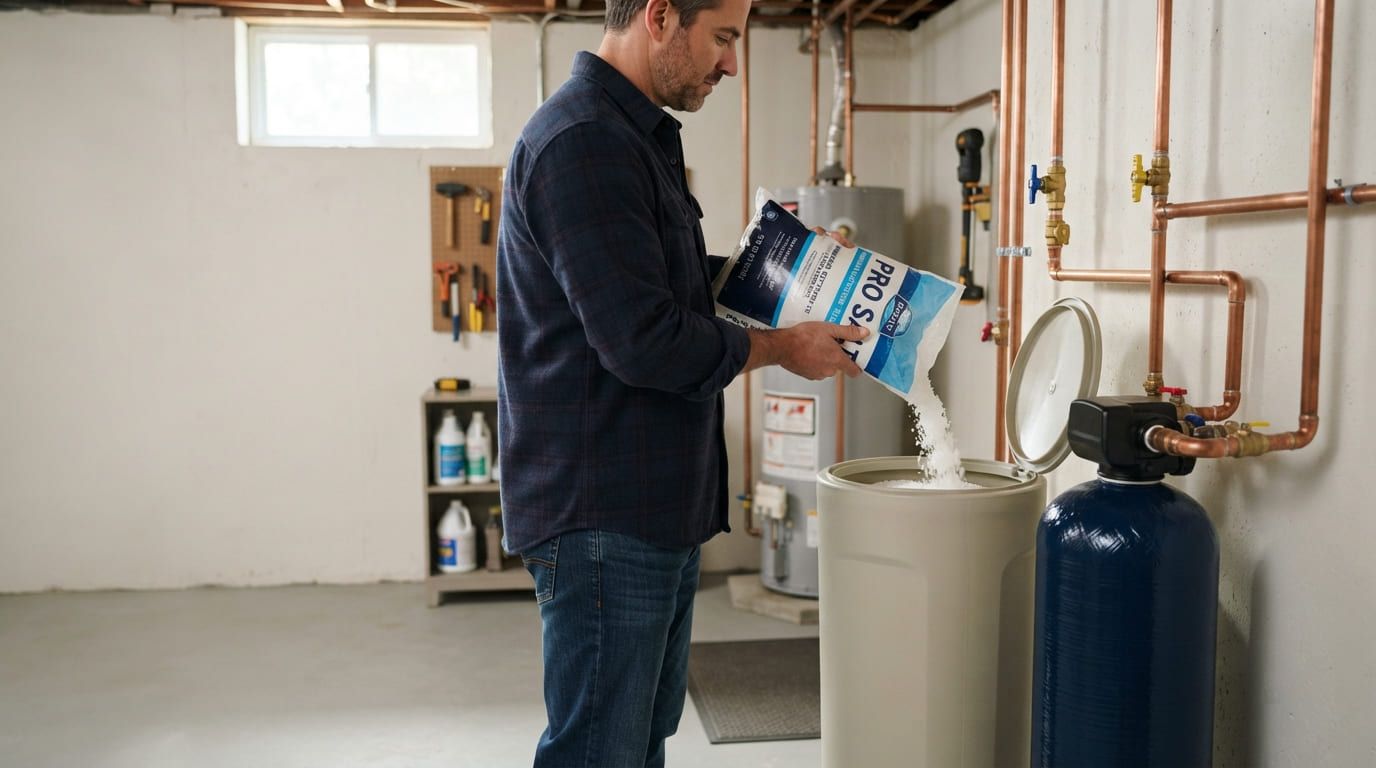
A salt bridge is a hardened layer of salt that forms inside a water softener brine tank. It creates a crust above an empty space, making the tank appear full even though the salt underneath may not be dissolving properly.
This matters because conventional water softeners use salt to create a brine solution during regeneration. The brine restores the resin beads that capture calcium and magnesium, the minerals responsible for hard water.
When a salt bridge prevents the salt from dissolving, the system may not produce enough brine to regenerate effectively. Over time, hardness minerals can pass through the softener and enter your household plumbing.
For homeowners in Brookfield, where municipal water hardness can be substantial, a properly maintained softener can help reduce mineral scale and make everyday cleaning easier. Recognizing a salt bridge early can help prevent unnecessary frustration and avoidable service calls.
What Causes a Salt Bridge to Form?
Several factors can contribute to salt bridging inside a brine tank.
Changes in Temperature and Humidity
Temperature fluctuations and humidity can affect how salt behaves inside the tank. Under certain conditions, salt particles can stick together and form a hardened layer rather than remaining loose.
The tank location can influence these conditions. Keeping the area reasonably dry and following the manufacturer's installation recommendations may help reduce the chance of recurring bridges.
Using the Wrong Type of Salt
Water softener salt comes in different forms, including pellets and crystals. Some products contain more impurities than others, and not every type is suitable for every system.
Use salt recommended by the manufacturer. Avoid substituting ordinary table salt or other products unless the equipment instructions explicitly allow them.
Filling the Tank Too Frequently
Adding salt whenever the tank looks low may seem helpful, but unnecessary filling can make it harder to monitor the actual salt condition. Follow the recommended fill level for your equipment and inspect the tank periodically.
More salt does not automatically mean better softening. The system needs the correct amount of salt to support regeneration, not an unnecessarily full tank.
How to Tell Whether Your Water Softener Has a Salt Bridge
A salt bridge is not always obvious from the outside. Several signs may indicate that something is wrong.
The salt level never seems to decrease. If the tank looks full for a long time despite normal water use, hardened salt may be preventing the system from using the salt underneath.
Hard water symptoms return. You may begin noticing white deposits on faucets, spots on glassware, or mineral buildup around showerheads. These symptoms can also have other causes, so they should not be treated as proof of a salt bridge.
The system is not softening water effectively. A hardness test may show that treated water still contains more calcium and magnesium than expected.
The tank contains a solid crust. When inspected according to the manufacturer's instructions, the salt may appear to form a rigid layer instead of loose crystals or pellets.
If you suspect a bridge, avoid adding more salt immediately. First determine whether the existing salt is dissolving properly.
How to Remove a Salt Bridge Safely
Many homeowners can address a simple salt bridge, but the correct procedure depends on the equipment. Always consult the owner's manual before beginning maintenance.
- Inspect the tank carefully. Follow the manufacturer's safety instructions and avoid reaching into the tank while the system is operating in a way that makes inspection unsafe.
- Check for a hardened layer. A salt bridge may feel solid across the surface even when an empty space exists underneath.
- Loosen the bridge gently if the manual permits it. Use an appropriate blunt tool and avoid sharp objects, forceful blows, or pressure against the tank walls and internal components.
- Remove loose material only as needed. Do not dismantle the brine assembly or remove unfamiliar parts unless the manufacturer specifically instructs you to do so.
- Allow the system to resume normal operation. Follow the manufacturer's instructions for checking salt levels and completing regeneration.
- Monitor performance afterward. Check whether the salt begins to decrease normally and whether a hardness test confirms that the system is softening water effectively.
If the bridge is difficult to remove, the tank contains heavy residue, or the system continues to produce hard water, contact a water treatment professional rather than risking damage.
Why Hard Water Is a Concern in Brookfield WI
The City of Brookfield reports that its municipal water comes from groundwater wells and that hardness averages approximately 23 to 34 grains per gallon. This is a high hardness range and helps explain why some local homeowners may experience noticeable mineral deposits.
Hard water contains calcium and magnesium that can leave scale on faucets, showerheads, and other surfaces. These minerals can also interact with soap and detergents, sometimes making cleaning more difficult.
A properly sized water softener can reduce hardness by exchanging calcium and magnesium for sodium or potassium ions. However, the system must regenerate correctly to maintain its performance.
A salt bridge can interfere with this process by preventing the brine tank from supplying the solution needed for regeneration. Regular inspections are therefore particularly useful for households that rely on a softener to manage significant hardness.
Actual water conditions can vary by service area and property. If you are unsure about your home's hardness, test the water rather than relying solely on general municipal averages.
How to Prevent Salt Bridges From Returning
Once you have addressed a salt bridge, a few routine habits may help reduce the chance of another one forming.
Inspect the salt level regularly. Check the tank every few weeks or according to the manufacturer's recommendations. Look for hardened layers instead of judging the salt level by appearance alone.
Use suitable water softener salt. Choose a product approved for your system and avoid mixing unfamiliar salt products without checking the manual.
Keep the tank at the recommended fill level. Follow the equipment instructions instead of automatically filling the tank to the top.
Keep the surrounding area appropriate for the equipment. Follow installation guidance for temperature, moisture, and ventilation conditions.
Pay attention to system performance. If the salt supply appears normal but hard water symptoms return, check the bypass valve, regeneration settings, and other possible causes.
Preventive maintenance cannot guarantee that a salt bridge will never form, but it can help you identify problems before they affect the system for an extended period.
When Should You Call a Water Softener Professional?
A salt bridge may be a straightforward maintenance issue, but recurring problems can indicate something more complicated.
Consider professional service if the tank repeatedly develops hardened salt, regeneration fails, the control valve displays an error, or treated water continues to test hard after the bridge has been removed.
A technician can inspect the brine tank, float assembly, control valve, and resin condition. They can also verify that the softener is properly sized and programmed for your household's water hardness and usage.
Getting the cause right helps avoid repeated maintenance and unnecessary equipment replacement.
Keep Your Water Softener Working Properly in Brookfield WI
A salt bridge can interrupt the regeneration process and allow hardness minerals to pass through your water softener. Regular inspections, suitable salt, and safe maintenance can help reduce the likelihood of recurring problems.
Brookfield Water Softener Company helps homeowners in Brookfield, WI explore water softening options and understand common system maintenance concerns. Contact Brookfield Water Softener Company to discuss salt bridge problems, water hardness, and practical ways to maintain your home's water treatment system.